

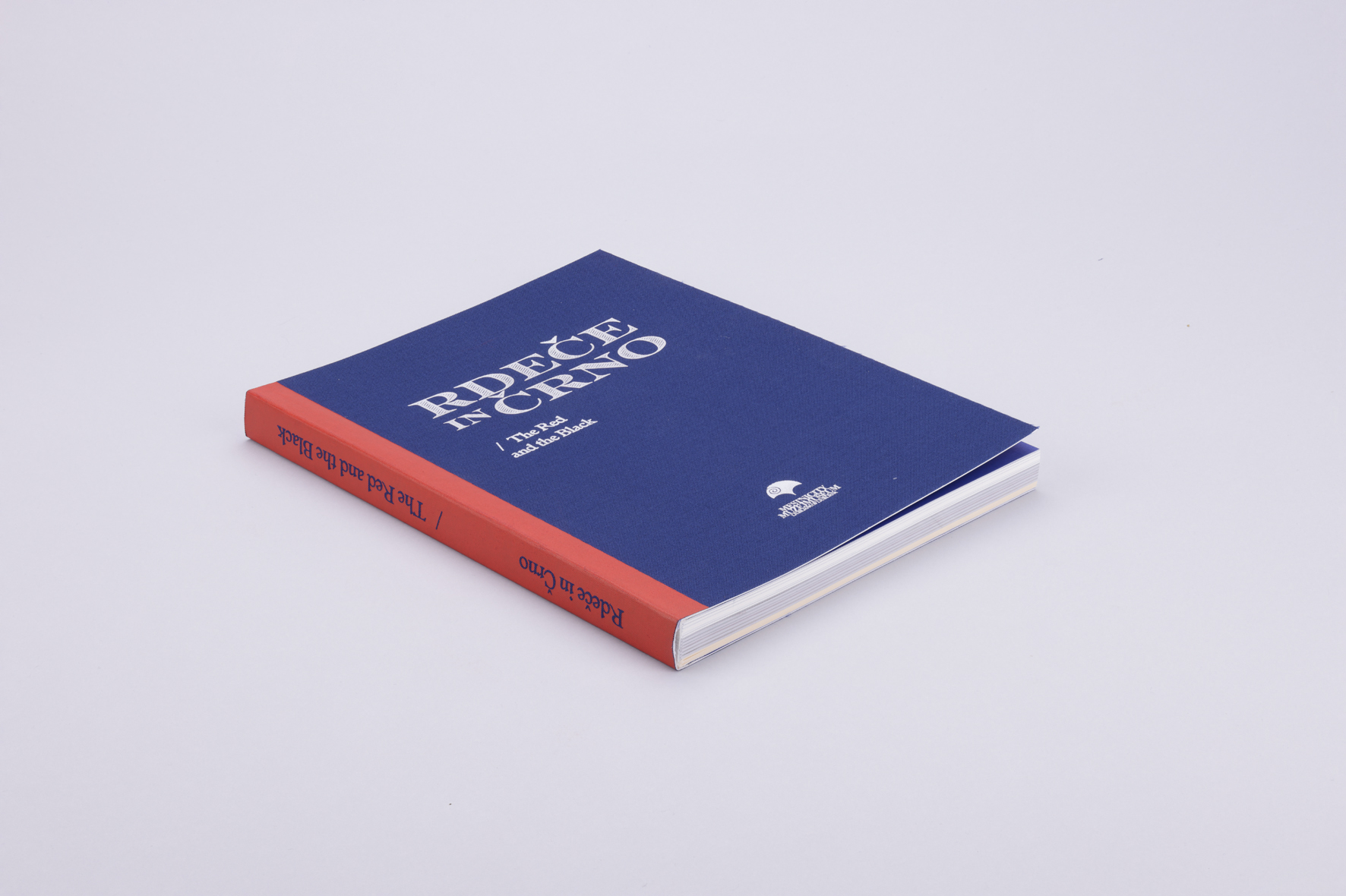
The Red and the Black
Exhibition Catalogue
In 2021, during the Slovenian Presidency of the Council of the European Union, the exhibition associated Ljubljana and Slovenia with their historical and current roles in the European international relations.
“The Congress of Ljubljana has entered historical memory as an event that placed Ljubljana on the European map. For several months, the city hosted discussions among diplomats, emperors, and decision-makers who were shaping the political map of post-Napoleonic Europe.
It was a time when Ljubljana, a small town of the Habsburg Monarchy, became a centre of diplomatic encounters. The congress established important foundations for the city’s further development. In historical accounts, it marked the first time Ljubljana appeared among cities where decisions were actually being made about the fate of people and nations, and about ways of life in Europe at the time. At last, the city also experienced a touch of cosmopolitan spirit.” (Blaž Peršin, Director of MGML)
Only a few left (1)
The exhibition and the accompanying catalogue aim to unveil this period in history – life in the city, the geopolitical realities of Europe at the time, and, of course, the significance of the Congress for the future of European political developments.
The exhibition’s author, Janez Polajnar, together with his team of collaborators, has succeeded in capturing these pivotal moments for Ljubljana with exceptional sensitivity, as well as the forces and consequences the event generated within the broader European context. One of the exhibition’s and catalogue’s aims is also to prompt contemporary reflection on how Europe lived then and how we view that era two hundred years later. Europe today is marked by different challenges, yet many of its hardships and unresolved questions persist.
The exhibition title is highly evocative: Red and Black. Stendhal’s novel of the same name describes the ascent of an ambitious young man who seeks entry into high society by means of talent, but also hypocrisy and murder. The diplomacy of the time likewise concealed its true motives, presenting narrow self-interest under the guise of the so-called common good of nations and states – though in reality, this applied to only a select few. After the agreements reached at the Congress of Ljubljana expired, a conservative spirit prevailed across Europe, followed by the revolutions of 1830 and 1848. The exhibition seeks to open up a space for reflection on how we read history and whether we are capable of learning from it.
Publishing and production: Ljubljana: Museum and Galleries of Ljubljana, Forum of Slavic Cultures
Authors: Janez Polajnar, Alessandro Quinzi, Ana Pokrajac, Blaž Vurnik, Anja Cizel, Maja Kranjc, Tomaž Lazar, Bojana Rogelj Škafar
Year: 2021
ISBN: 978-961-95193-9-4