

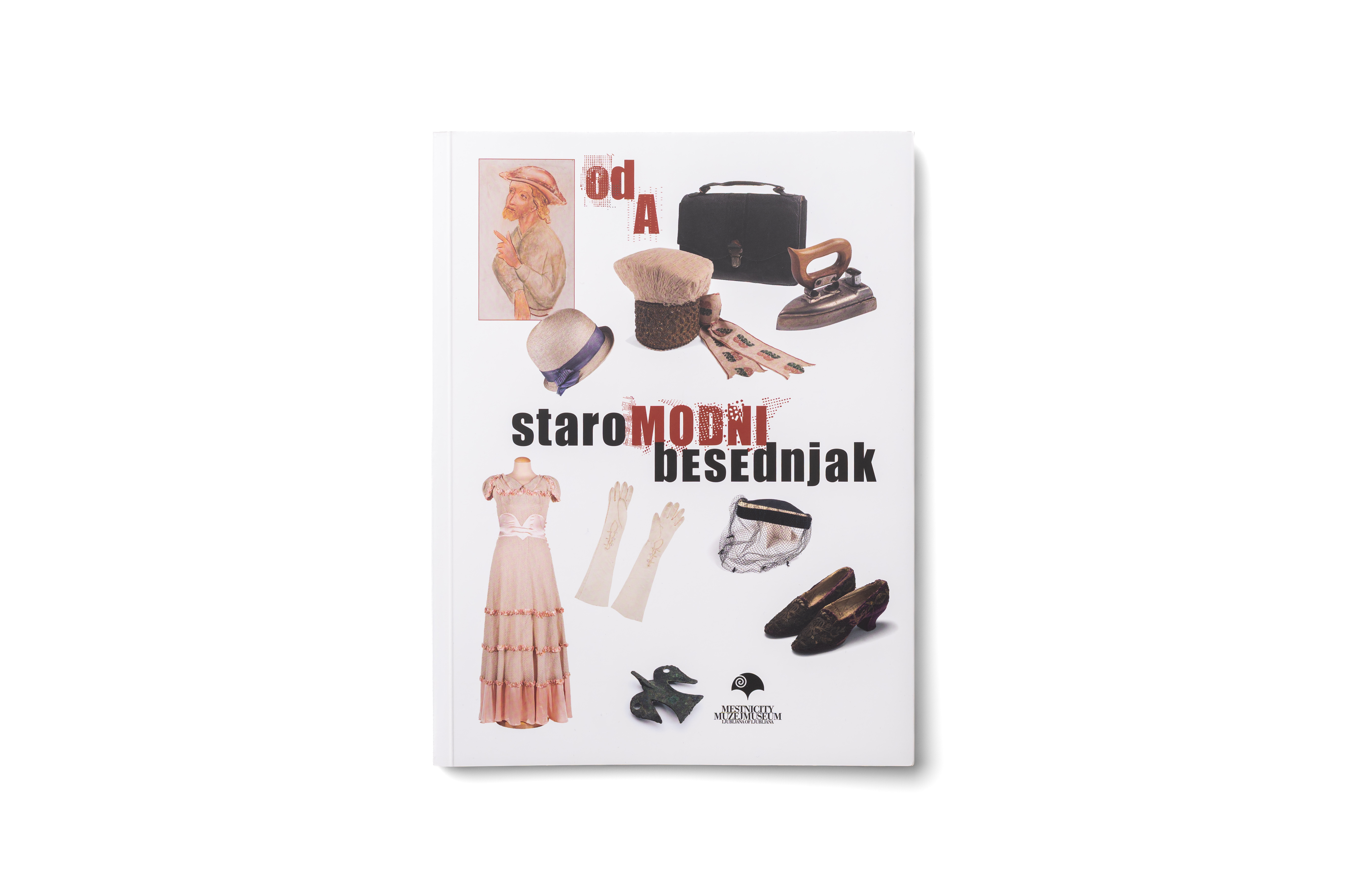
StaroMODNI besednjak
A lexicon of the fashion and dress culture of Ljubljana’s women and men between 1850 and 1950.
Discover the rich clothing heritage of Ljubljana’s residents between 1850 and 1950!
StaroMODNI besednjak (English: Dictionary of Historical Fashion Terms) is a unique lexicon of fashion terminology, offering entries on everyday and festive clothing, fashion accessories, and their historical contexts.
Enriched with extensive visual material, the book brings stories of bourgeois fashion and lifestyle. If you are interested in fashion and history, or if you are looking for the perfect gift for lovers of the past, this book – based on the clothing collection of the City Museum of Ljubljana – is the ideal choice.
Avaliable only in Slovene!
20
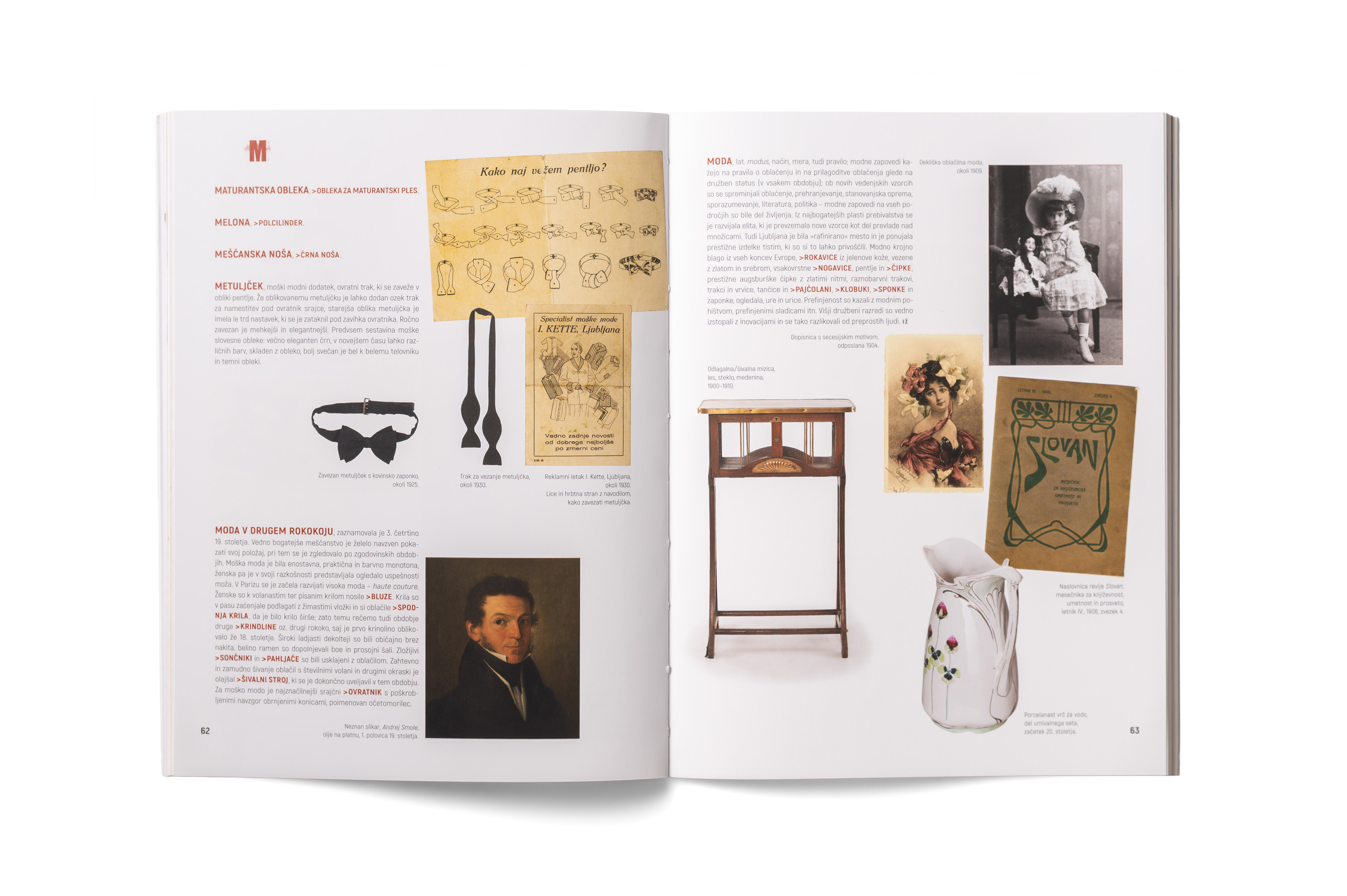
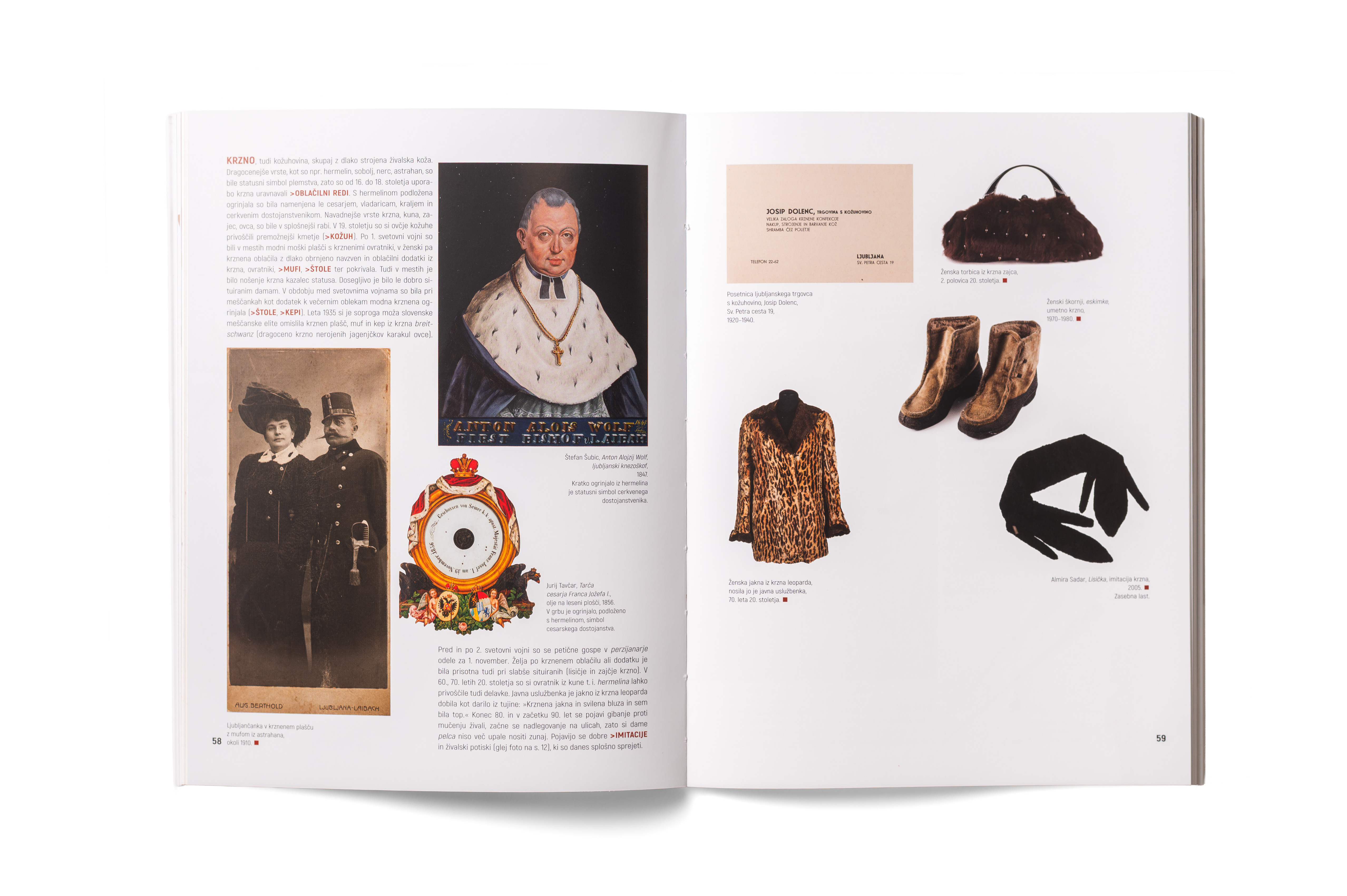
The StaroMODNI besednjak was published alongside the exhibition on the former clothing culture of Ljubljana’s residents, Od korzeta do žaketa (English: From Corset to Jacket). It is a lexicon dedicated to the fashion and dress culture of Ljubljana’s women and men between 1850 and 1950. Across 128 pages, readers encounter both familiar and lesser-known terms for everyday and festive garments, as well as general concepts related to fashion and dress culture. All entries are supported by rich visual material.
The exhibition From Corset to Jacket presents only a tenth of the extensive museum collection of clothing and fashion accessories, which has been growing since the 1950s and by 2023 included as many as 4,500 items. Because we wanted to highlight the stories of many other museum artefacts from this rich clothing collection¸- objects not featured in the exhibition – we prepared the accompanying publication StaroMODNI besednjak. It showcases around 270 images of objects and entries prepared by curators from various disciplines: archaeology, history, art history, and ethnology. The explanations are enriched with descriptions of historical development, intriguing details about individual pieces, and additional accounts and literary excerpts from the people who once wore them.
The dictionary aims to place the reader within the historical context, evoking the atmosphere and conditions of each period. It revives terminology from the world of fashion and highlights fascinating clothing items that are less known to the public and are gradually disappearing from everyday vocabulary. A bibliography at the end of the book offers numerous opportunities for independent exploration.
“We all know the saying ‘Clothes make the man.’ Throughout history, clothing has provided protection against cold or heat, concealed parts of the body, and reflected the period and social status of the people who wore it. […] Do we still remember that a first dance, the memory of a first love, the first day of school, or graduation were all tied to the clothes we wore at the time? Clothing can make – or fail to make – the person. We usually choose it ourselves, and it expresses our relationship to the space and time in which we exist, together with the clothes we wear. On the other hand, another saying holds true: ‘The person makes the clothes – if they know how to wear them.’”
— Blaž Peršin, Director of MGML, from StaroMODNI besednjak
Editors: Mojca Ferle, Irena Žmuc
Publisher: Museum and Galleries of Ljubljana
Authors of entries: Mojca Ferle, Dr. Irena Žmuc, Dr. Bernarda Županek, Ana Pokrajac Iskra, Barbara Savenc, Martin Horvat
Language editing: Mag. Alenka Klemenc
Photography: Blaž Gutman, Karmen Brecelj, Andrej Peunik, Matevž Paternoster, Ana Porok, Marko Zaplati, Drago Mohar, MGML Documentation
Illustrations: Žiga Okorn
Design: Evita Lukež
Print: Silveco
Print run: 300 copies
January 2025